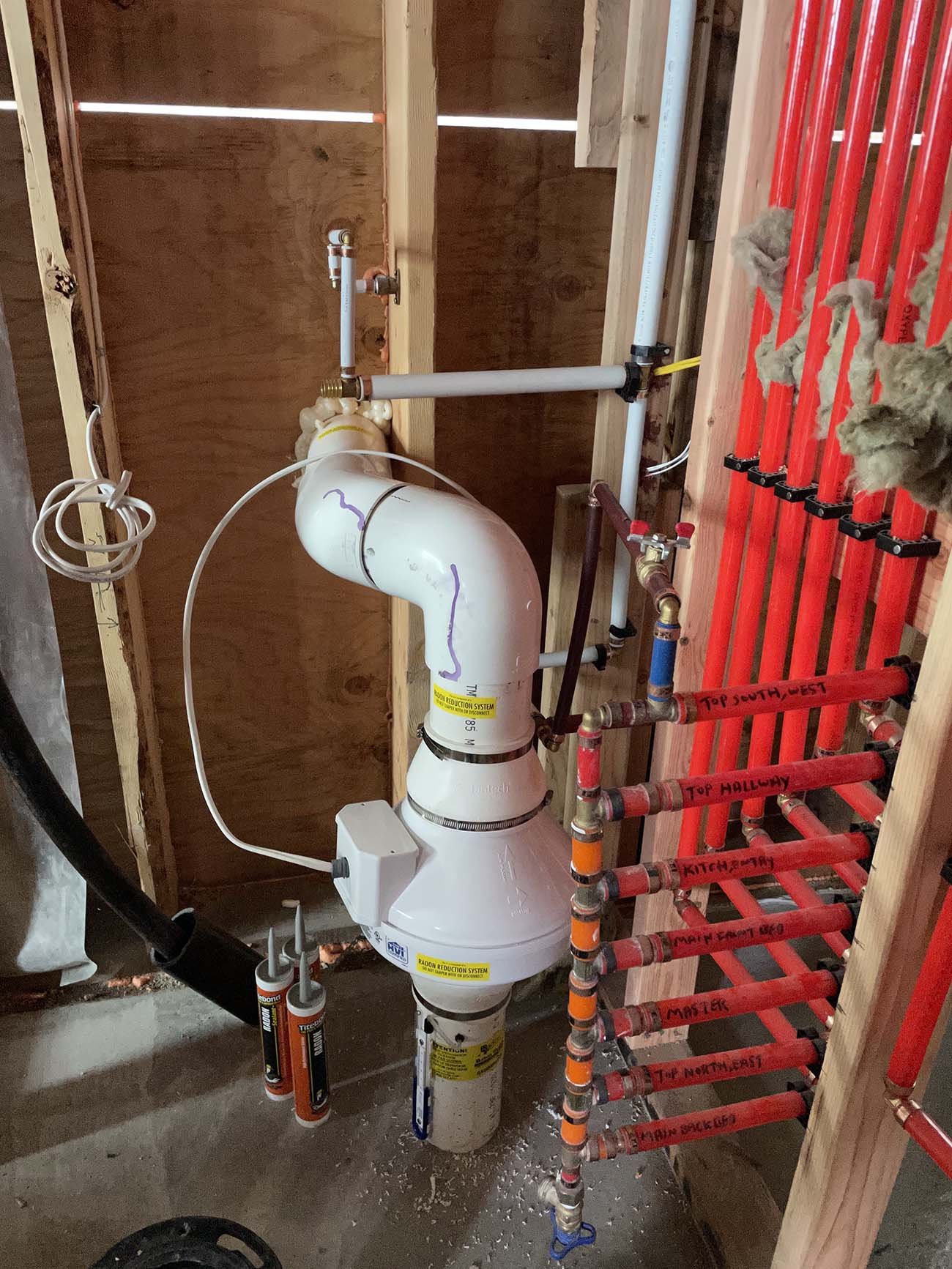
Active soil depressurization system using RN4EC4 Fan
There are many factors to consider when finding a radon mitigation system that is right for you. That’s why we advise that you consult with a radon mitigation specialist. They will test your home’s radon levels, address the size of your home and type of foundation, and take into consideration soil and weather characteristics, installation and system operation costs.
It's also important to consider the radon mitigation system effectiveness. For example, active suction systems reduce radon concentrations by 50% to 99%, while passive suction systems only lower concentration levels by 30% to 70%. A passive system, on the other hand, may be sufficient if your radon gas concentrations are on the low end of the scale. If radon levels rise, you can easily add a fan later.
Let’s review the factors you should consider when finding the best radon reduction system.
WHAT IS RADON GAS?
Radon is a naturally occurring radioactive gas that results from the breakdown of uranium in soil and rock. It is odourless, tasteless, and colourless. When radon is discharged into the air from the earth, it is diluted and is not a health hazard. It can, however, build up to dangerous amounts in enclosed environments such as dwellings.
WHERE DOES RADON GAS COME FROM IN A HOUSE?
Radon can enter a home through any fractures in foundation walls and floor slabs, construction joints, gaps around service pipes, support posts, window casements, floor drains, sumps, or cavities inside walls where the house is in contact with the ground.
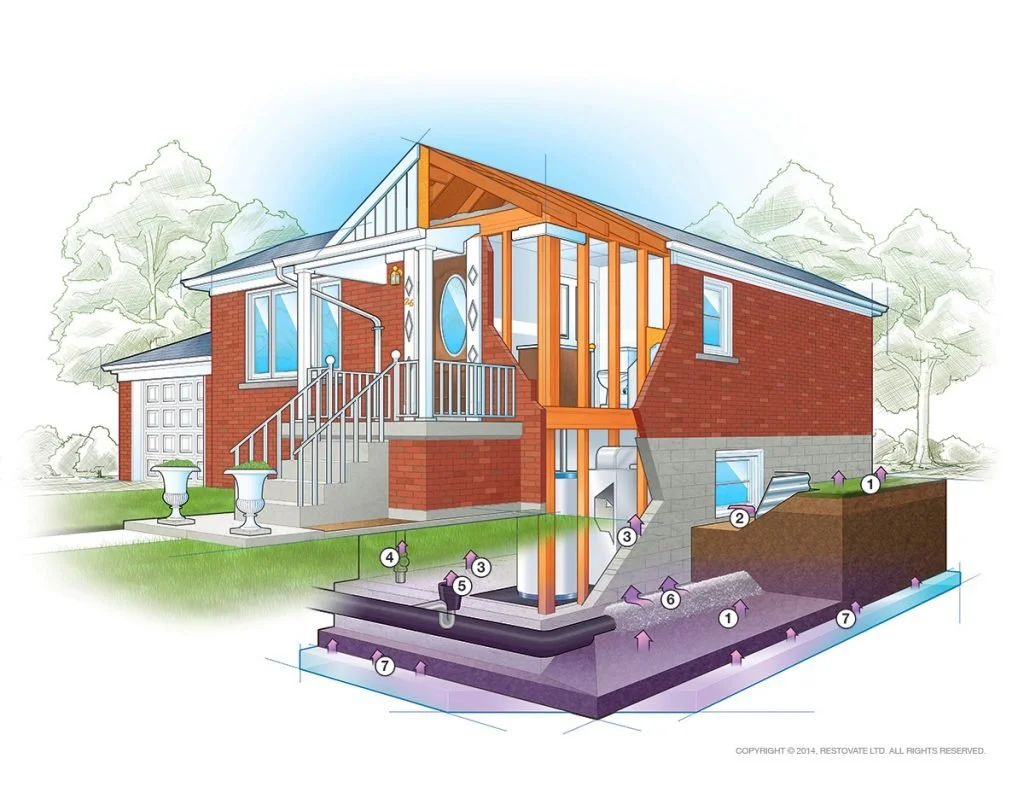
How does radon gas enter your home
Soil
Windows
Cracks in walls & floors
Loose pipe fittings & support posts
Floor drains & sump pumps
Wall & floor joints
Ground water
RELATED: RADON TESTING: WHAT RADON TEST DO YOU NEED?
HOW DO RADON REDUCTION SYSTEMS WORK?

Mike Holmes with a fully installed mitigation system in a home.
Depending on which radon mitigation system you choose to install in your home, you can lower radon levels by up to 99 percent.
Radon in the air is reduced through ventilation, which can be gathered beneath a concrete floor slab or through a ground membrane, or by increasing the number of air changes per hour in the building. Radon can be removed from home water sources using aeration or activated charcoal treatment devices.
HOW TO SELECT THE BEST RADON REDUCTION SYSTEM?
Your contractor will evaluate numerous factors when choosing a radon reduction solution for your home, including:
Your home's radon level
Installation and system operation costs
The size of the house and the type of foundation
Soil characteristics and weather
The characteristics of your home determine the efficiency of any radon-reduction procedure by the amount of radon present, how it enters your home, and how effectively the work is done. While a single strategy may be effective, there are occasions when a combination of methods is required.
THE ONLY WAY TO KNOW IF YOU HAVE RADON IN YOUR HOME IS TO GET TESTED.
SPRAY FOAM INSULATION AND RADON

Spray foam alone is not a radon mitigation system and a radon fan and exhaust point are still required to constitute a complete mitigation system.
A tighter house will be more energy-efficient than a leaky house, allowing for higher radon gas concentrations. That's why it's crucial to retest for radon after a home has been air-sealed or new insulation has been installed. Spray foam insulation prevents radon from entering your basement by sealing gaps and cracks in the walls. Thus, decreasing the amount of radon entering your home will create healthier indoor air quality and help regulate the temperature in your home. Spray foam forms a continuous air barrier that protects against radon and other gases as the first line of protection. Spray foam also acts as a vapour barrier, protecting the foundation. However, spray foam alone is not a radon mitigation system and a radon fan and exhaust point are still required to constitute a complete mitigation system.
RADON AND VENTILATION
Installing a heat recovery ventilator system (HRV) is by far the most straightforward option for radon reduction. An HRV can be used in both new and existing homes, and it exhausts the radon-containing old air and replaces it with fresh outdoor air. HRVs provide a consistent level of airflow throughout the year if properly balanced and maintained and can also help to enhance the indoor air quality in homes with additional contaminants.

Coupled with an HRV, Radostat provides the simplest radon mitigation system that is highly beneficial for retrofit and new build scenarios
The NRC in Ottawa has published data relating to the effectiveness of the HRV as a radon mitigation tool. It is important to balance the HRV slightly positive, when using it as a radon mitigation system as the positive pressure helps stop the ingress of Radon into the home.
The Fantech Fresh Air Appliance can ventilate your entire home with fresh outdoor air up to 20 times per day while recovering 80% of the energy. The building codes in Alberta, British Columbia, Saskatchewan, Manitoba, New Brunswick, the Yukon, Nova Scotia, and some sections of Prince Edward Island all mandate radon rough-ins and it’s important to note that all new builds in Ontario require HRV installations.
Tip: You can add a device called a Radostat from Radon Environmental that will measure your Radon levels and pilot the HRV to run when Radon levels are high.
HOW Fantech’s Fresh Air Appliance WORKS
Clean outdoor air is drawn into the unit. The fresh air is warmed and distributed throughout the house. Stale, musty, humid, and impure air is extracted from the home and used to warm up the cold incoming air. The unhealthy warm air is then expelled to the outdoors. An innovative counterflow core exchanges energy while keeping airflow separate to avoid contamination.
LEAKAGE OF RADON
Sealing any openings in your home where radon could enter could help lower your radon levels. However, it is not a stand-alone strategy for reducing radon levels because it is difficult to find, access, and securely seal all openings.
Other openings your radon mitigation professional will look at are:
Open Sumps: An airtight cover can be added to sumps. If the sump also serves as a floor drain, a unique trap should be added to the airtight cover, which should be slightly recessed into the sump.
Floor Drains: Special traps can be built in basement floor drains to allow water to drain while preventing radon from entering the basement. Molds, odours, insects, and cold draughts are all kept out by using these traps.
Floor Wall Joint: The seam between the foundation wall and the basement floor can be sealed if it is accessible. This joint can play a significant role in radon levels in a home.
Exposed Soils: A plastic membrane with sealed edges and seams can be used to cover exposed earth in crawl spaces. After a membrane has been built, concrete can be poured to cover any exposed soil in a basement that does not have a floor slab (e.g., a cold storage room).
Voids in Concrete Block Walls: Seal cavities in the top of the foundation and inner load-bearing walls if there isn't a solid row of block.
After shutting main openings, minor entry routes that are visible or accessible can occasionally be sealed to further reduce radon levels. Minor foundation cracks in the walls and flooring can be repaired. Larger cracks necessitate unique techniques; consult a contractor or a construction material supplier. The gap around utility penetrations in walls and floors (e.g., water, sewer, electricity, natural gas, fuel oil) can also be sealed using low expansion spray foam.
Drainage (Depressurization of the Drainage System)
Water drainage systems inside a home can provide an easy pathway for radon to enter your home. However, when the sump pit is covered with a sealed lid and connected to a venting pipe, the amount of radon entering your home can effectively be reduced. You can also connect a radon mitigation system to it if you have an exterior drain located outside next to your foundation. The radon is drawn from the soil and through the sump to an outdoor exhaust point above the home's roof by a radon fan linked to the vent pipe.
Warranty
Your radon mitigation system will typically come with a lifetime warranty when installed by a licensed provider, but it is always advised to be aware of the warranty upfront. The fan, however, is not covered by the system guarantee and a typical manufacturer warranty is 5-years, while other fans may have a shorter or longer warranty period. It's always best to work with your licensed provider and understand the maintenance and warranties associated with your specific system.
One of the biggest radon fan manufacturers is Fantech, and the Fantech RN2 Radon Fan is one of the top 5 radon fans on the market.
TYPES OF RADON REDUCTION SYSTEM
Exterior Installed Radon Mitigation Systems
These are active soil depressurization systems that use a radon vent fan. These systems are made up of various parts: The radon suction pipes are placed in the basement or crawlspace and enter the earth beneath.
The exterior Radon Mitigation systems seen in the USA where the code is to have the pipe external to the house. In Canada, by contrast, the fan is installed in the house. The Fantech line of Fans meet both specifications. It is important that if you pass the pipe through the attic in unconditioned air that you insulate the Radon pipe as the air passing through it is very humid and the pipe can freeze in winter months.
Attic Installed Radon Mitigation Systems
The radon suction pipes are placed in the basement or crawlspace and enter the earth beneath. Radon gas and other soil gases from the ground are sucked into the suction pipes. The suction pipe continued up the foundation wall and into the garage, penetrating the rim joist.
Passive Radon Mitigation Systems
A passive radon system is a radon system without a radon exhaust fan. A passive system typically runs from the basement sump crock or drain tile and exhausts through the roof without using an active radon exhaust fan.
Passive radon systems rely on a phenomenon known as the "stack effect." To carry air and radon gas through the pipe from the basement to the exhaust vent, the stack effect relies on air pressure differentials. When there is a difference in indoor and outside air density due to temperature and moisture fluctuations, air buoyancy occurs.
The stack effect is usually insufficient to considerably lower radon levels in a passive radon system because new dwellings are typically airtight to accommodate energy efficiency.
Radon Mitigation for A Crawlspace

Extra care must be taken to seal around the pipe where it penetrates the Radon Block engineered membrane.
A radon mitigation system will comprise a long-lasting air and moisture barrier that will completely cover the dirt floor of the crawl space. Radon gas can be mitigated by encapsulating the crawl area. To make this procedure work, extra care must be taken to seal around the pipe where it penetrates the plastic sheet. When using this method, it is important to select the right membrane. We recommend Radon Block which is an engineered 20 mil membrane that has a very low radon diffusion coefficient and is very durable.
RADON REDUCTION SYSTEM IN NEW CONSTRUCTION
At a minimum, builders should have some rough-in that includes: a layer of clean gravel or aggregate beneath the slab or flooring system, covered by polyethylene sheeting, a gas-tight venting pipe from the gravel level through to the outside of the building or roof, and sealing and caulking all gaps and cracks in the foundation are all essential requirements.

Installation of Radon Guard in a new construction build with RDC Fine Homes.
An alternative to the clear gravel is Radon Guard, a structural sub slab insulation panel that will add R value below your slab and at the same time creates a 68% void space from which to vent Radon and soil gasses as well as drain the water. It is code approved to replace the clear gravel layer in both Canada and the USA.
Level 2 is a complete passive radon reduction system that employs a vertically stacked stack that exhausts above the roofline. Due to the stack effect, the technology reduces indoor radon levels sporadically and does not require electricity. Radon levels are typically reduced by 50% with a Level 2 system.

Radon Block™ is the new leading high performance radon blocking barrier membrane.
RELATED: RADON MITIGATION: HAVE YOU CONSIDERED A RADON REDUCTION SYSTEM IN A NEW HOME?
Health Effects of Radon
Signs of Radon Poisoning
Radon is a silent killer. According to the Lung Association of Canada, radon is the second biggest cause of lung cancer in non-smokers. While radon decays, radioactive particles develop, which can become trapped in your lung tissue as you breathe. The energy released by radon particles can harm the cells in your lungs. Lung cancer can develop when the cells in your lungs become damaged.
You are at an even higher risk of lung cancer if you smoke and reside in a home with a high level of radon.
Common Symptoms:
Shortness of breath.
A persistent cough.
Tightness or pain in the chest.
Hoarseness.
Trouble swallowing.
How Long Does It Take for Radon Gas to Affect You?
Radon is a gas that enters the body as small particles. When these particles penetrate the lungs, alpha radiation is released, harming lung cells and leading to lung cancer. Unfortunately, radon poisoning has no treatment. The effects of the radiation are irreversible.
Lung cancer takes at least five years to develop when a particle destroys a cell and causes it to become malignant, but it commonly takes 15 to 25 years or even more. Only a few people who are exposed to radon develop lung cancer, but the more you are exposed to it, the more likely you are to develop lung cancer.
Where is Radon Most Commonly Found?
Radon exposure occurs in every building. The only way to know how much you have is to test for it. After entering buildings through cracks and other openings in the foundation, radon gas becomes trapped inside. Indoor radon can be regulated and managed using tried-and-true methods.
The highest levels of radon are typically found in the basement or first floor, and levels can vary from house to house, even homes side-by-side!
Radon Inspection by Professionals
A radon test determines the amount of radon present in your home. There are two types of testing: a do-it-yourself radon test kit or a test performed by a C-NRPP professional house inspector or radon specialist.
Mike Holmes Inspections inspectors are fully trained professionals certified by the Canadian National Radon Proficiency Program (Canadian-NRPP). C-NRPP professional house inspectors or radon specialists are specially trained to provide you with expertise and knowledge to help homeowners and building owners measure and reduce their radon levels.
How to Reduce Radon in Indoor Settings?
To minimize radon, most people utilize a system that includes a vent pipe(s) and a fan(s). These "sub-slab depressurization" solutions don't necessitate any considerable housing modifications. Crawl space dwellings can also benefit from similar solutions. These systems keep radon gas from the house by trapping it beneath the concrete floor and outside the foundation. Radon mitigation contractors use other radon reduction methods that may work in your house. The best system is determined by your home's design and other considerations.
RELATED: MITIGATE RADON: HOW TO MITIGATE RADON IN YOUR HOME IN 100 DAYS OR LESS.
As you can see, there are numerous factors to consider as well as a variety of radon mitigation system solutions, some of which work in tandem with one or more methods. Find a certified mitigator by contacting the Canadian National Radon Proficiency Program (C-NRPP) at 1-855-722-6777 or info@c-nrpp.ca, or the Canadian Association of Radon Scientists and Technologists (CARST) at info@carst.ca, or Health Canada at hc.radon.sc.canada.ca. Protect yourself and your family by having your home tested and installing a radon mitigation system to reduce the dangers of radon gas.
Q & A SECTION:
Can you run a ceiling fan during a radon test?
No. During the test, turn off any air-moving equipment. Ceiling fans, dehumidifiers, conventional fans, HEPA filters, and any other air-moving filtering equipment fall into this category. During the test, only use fireplaces or heating stoves if they are your primary source of heat.
Do dehumidifiers remove radon?
No, buying a dehumidifier will not make radon go away.
Does rain affect radon testing?
In short, yes, radon concentrations are predicted to be slightly higher within your home on rainy days. The weather is one of the most important factors in radon levels. Weather changes, especially severe weather, can modify pressure differences and, as a result, the way radon enters your home. Radon levels in a home typically rise after specific weather events, such as storms. Strong winds, for example, can cause radon levels to rise or fall. Depending on the situation, weather events can cause your radon levels to rise or decline. Weather has a number of effects on your test, and it's impossible to forecast which ones.
Do open windows affect radon testing?
It's vital to remember that while testing for radon, the house must be completely closed up – that’s why is it best to test in the fall and winter months. The test will be invalid if any outside doors or windows are open.
Does opening doors reduce radon?
Opening windows to minimise radon levels isn't a viable long-term strategy. Open windows, can minimise radon in the short term, allowing you to stay in your home safely until you can build a permanent solution.
Can air purifiers reduce radon?
Air cleaners or purifiers are machines that filter or electrostatically remove particulates from the air, such as dust or radon decay products. Air cleaners are routinely used to condition indoor air for several health benefits and overall comfort in the home, and attempts have been made to market air cleaners to prevent radon decay. Mold, dust, allergies, germs and viruses, and odours are all things that air purifiers can help with, but there are manufacturers that claim they may also aid with poisons, gases, and compounds like radon. An activated carbon filter is the most effective form of air filter and, according to some research, can help in reducing radon levels. However, this technology has not been proven to help decrease the health concerns associated with radon. The EPA does not recommend using air cleaners to reduce radon decay products in indoor air at this time. Although air cleaners will remove some radon decay products, numerous issues remain about the relative health effects of the decay products that aren't removed and the possible impacts of the radon decay products' undiminished source. The EPA feels there is insufficient evidence to recommend the installation of air cleaners to lower the risk of exposure to radon and its decay products until additional data is available.
Are portable radon detectors accurate?
There are definitely several reliable portable radon detectors. If fact, Ecosense EcoCube and Radon Eye are in the top 10 Radon Detection Devices by Best Review Guide for 2022.
Can radon cause mental illness?
For many people, radon does not directly cause psychological disorders. However, the potential of radon in your home can cause anxiety and restless thoughts about the prospective health risks of living in a home with a high radon level. New research is being conducted every day, and there are university studies looking into linking Radon exposure to early on-set Alzheimer’s.
Do Ceiling fans reduce radon?
Ceiling fans do not reduce radon. In fact, if the blades on the fan are pulling air upwards it could actually increase the radon levels very slightly.
Does every house have radon?
Every home has some radon, although concentration levels differ from one home to the next, even if they are near to each other. The only way to know how much is to test for Radon.